
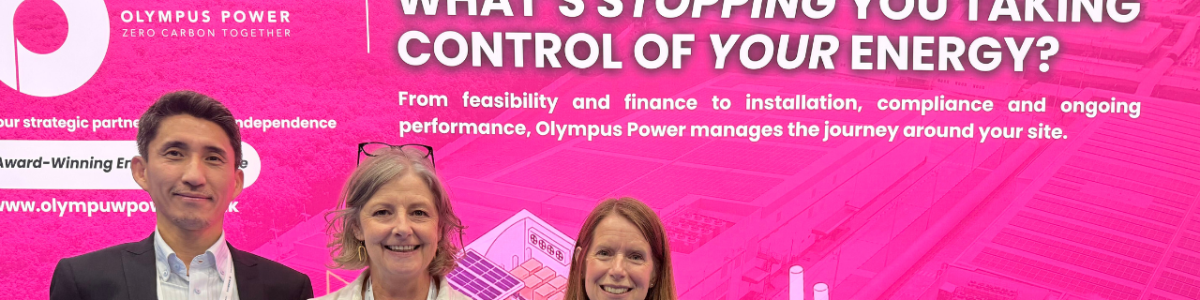
Olympus Power reflects on Cold Chain Live 2026, the conversations shaping the future of temperature-controlled operations and the importance of building a more resilient, sustainable cold chain.
Cold Chain Live 2026 has officially wrapped up, bringing together businesses, industry leaders and partners from across the UK’s temperature-controlled logistics and cold storage sectors.
For Olympus Power, it was a fantastic opportunity to reconnect with familiar faces, establish new relationships and discuss some of the most pressing energy challenges facing the industry.
Our team, Vanessa, Nick, Lois and Founder & CEO Simon Nicholls, attended the event to share insights into how commercial renewable energy solutions can support cold storage operators in reducing energy costs, improving operational resilience and working towards their long-term sustainability objectives.
From the importance of reliable electricity supplies to the growing role of renewable energy technologies, the event provided valuable opportunities to discuss how businesses can take greater control of their energy future.
Strengthening Relationships Across the Cold Chain Industry
One of the highlights of Cold Chain Live 2026 was the opportunity to meet with businesses and organisations working across the cold chain.
These conversations are particularly valuable because the energy requirements of temperature-controlled operations are unlike those of many other commercial environments.
Refrigeration systems, temperature monitoring, warehousing equipment and associated infrastructure can create substantial and continuous electricity demand. Maintaining the correct conditions is essential for product quality, regulatory compliance and operational continuity.
At Olympus Power, we believe effective energy strategies begin with understanding how each business operates.
By exploring individual site requirements, consumption patterns and commercial priorities, we can help businesses identify opportunities to improve energy efficiency, manage costs and strengthen their long-term resilience.
Catching Up With Our Charity Partner, Transaid
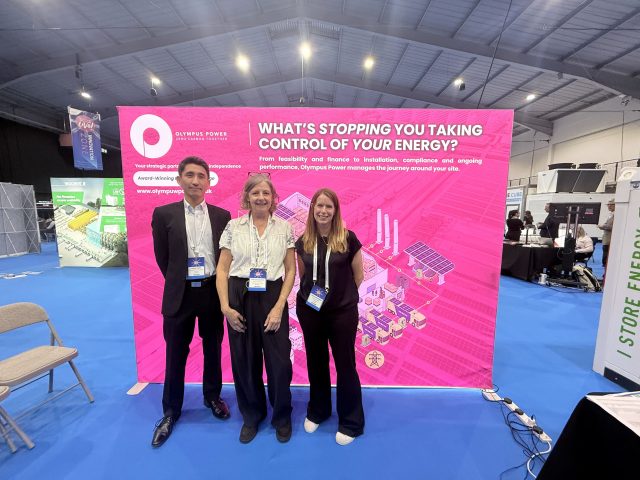
It was also fantastic to catch up with our charity partner, Transaid, including Chief Executive Caroline Barber and Corporate Partnerships Officer Kohei Ohno.
We’re proud to support their work improving road safety and access to healthcare, and it was a pleasure to reconnect in person.
Transaid works with partners to address transport challenges in sub-Saharan Africa, helping communities access essential healthcare services and supporting initiatives that improve road safety.
Our partnership reflects Olympus Power’s wider commitment to making a positive impact beyond the renewable energy sector.
Events such as Cold Chain Live provide an excellent opportunity to strengthen these relationships and recognise the importance of collaboration across the wider logistics industry.
Four Key Energy Considerations for Cold Storage Operators
Our conversations at Cold Chain Live reinforced several important considerations for businesses looking to improve their energy performance.
1. Managing Energy Costs Remains a Commercial Priority
Cold storage facilities are inherently energy-intensive, with refrigeration systems often operating continuously to maintain controlled environments.
This makes electricity expenditure a significant operational consideration, particularly when businesses face uncertainty surrounding future energy prices.
Commercial solar PV can help suitable facilities generate electricity on-site, reducing the amount of power purchased from the grid during periods of solar generation.
For operators with substantial daytime electricity consumption, this can present an opportunity to reduce long-term operating costs.
However, the commercial benefits depend on factors including site suitability, consumption patterns, system design and financing arrangements.
2. Energy Resilience Is Essential for Operational Continuity
For temperature-controlled businesses, a disruption to electricity supplies can have consequences extending beyond energy costs.
Maintaining reliable refrigeration and temperature monitoring is critical for protecting stored goods, supporting supply chain reliability and minimising operational risk.
Battery Energy Storage Systems (BESS), alongside appropriate controls and infrastructure, can support more flexible energy management.
Depending on their configuration, battery systems may also contribute to resilience during certain supply disruptions. Backup capability requires specific technical design and should not be assumed from battery installation alone.
A comprehensive energy strategy should consider both cost management and the operational importance of reliable power.
3. Renewable Energy Can Deliver Wider Commercial Benefits
Renewable energy is increasingly relevant to businesses looking beyond immediate cost savings.
Commercial solar PV, battery storage, voltage optimisation and intelligent energy monitoring can form part of a coordinated approach to improving energy performance.
Potential benefits include:
- Reduced reliance on purchased grid electricity.
- Greater visibility and control over energy consumption.
- Opportunities to reduce operational carbon emissions.
- Improved long-term energy planning.
- Better alignment between energy investment and sustainability objectives.
The most effective approach is to evaluate how individual technologies work together rather than treating each solution as a standalone investment.
4. Every Cold Storage Facility Requires a Tailored Strategy
No two cold storage operations are identical.
Facility size, refrigeration requirements, operating hours, electricity demand, roof space and existing infrastructure can all influence the suitability of different energy solutions.
A distribution centre operating around the clock may require a different strategy from a smaller refrigerated warehouse with predominantly daytime activity.
At Olympus Power, our approach begins with understanding these operational differences.
As a long-term energy partner, we support businesses in evaluating suitable technologies, considering funding options and developing energy strategies aligned with their commercial priorities.
Missed Our Cold Store Renewable Energy Guide?

During Cold Chain Live, our team shared the Cold Store Renewable Energy Guide, developed to help businesses explore opportunities to improve energy performance across temperature-controlled facilities.
The guide provides a useful starting point for operators considering renewable energy and looking to understand how different technologies may support their operations.
If you didn’t have the opportunity to pick up a copy at the event, you can access it through our Energy Insights & Resources page.
Explore Our Cold Store Renewable Energy Guide
Continuing the Conversation Beyond Cold Chain Live
We’d like to thank everyone who visited our stand, shared their experiences and took the time to speak with Vanessa, Nick, Lois and Simon.
The event reinforced the value of collaboration between energy specialists, cold storage operators and the wider logistics sector.
As businesses continue to navigate energy costs, operational pressures and sustainability commitments, we look forward to supporting organisations seeking practical, commercially viable energy solutions.
Did you meet our team at Cold Chain Live 2026?
We’d love to hear from you. Connect with Olympus Power on LinkedIn, leave a comment on our event wrap-up post or get in touch to continue the conversation.
Together, we can help build a more resilient, efficient and sustainable future for the UK’s cold chain industry.