
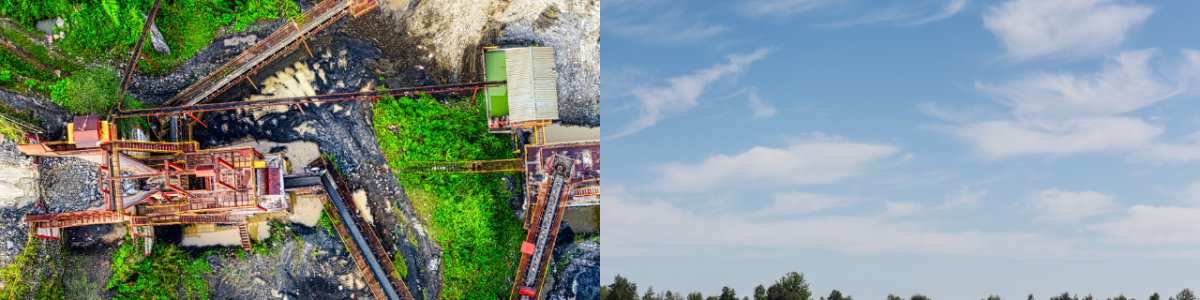
Across the UK, businesses are facing rising energy costs, increasing pressure to reduce carbon emissions, and growing demands on operational efficiency.
At the same time, many organisations own or manage land that generates little or no commercial value.
From former quarries and brownfield sites to unused industrial land and surplus operational space, these areas often represent untapped opportunities. With the right energy strategy, underutilised land can be transformed into a long-term asset that supports both sustainability goals and business performance.
Why Businesses Are Looking Beyond Rooftop Solar
While rooftop solar remains an effective solution for many organisations, not every business has sufficient roof space to meet its energy demands.
Ground-mounted solar offers an alternative approach, allowing businesses to generate significant amounts of renewable electricity using available land.
For energy-intensive sectors such as manufacturing, aggregates, logistics, warehousing and industrial processing, this can provide a valuable source of onsite generation while reducing exposure to fluctuating energy prices.
Turning a Former Quarry Into a Renewable Energy Asset
One of Olympus Power’s earlier projects involved the development of a 12 MW ground-mounted solar PV installation for an aggregate company.
The project transformed a former quarry into a productive renewable energy asset capable of supporting the site’s ongoing operations.
The installation delivered:
- 12 MW installed capacity
- More than 38,000 solar panels
- Annual carbon savings of over 2.29 million kg of CO₂
- Approximately 10% of the site’s annual energy demand supplied through onsite generation
By generating power behind the meter, the site reduced its reliance on imported electricity while making productive use of previously underutilised land.
The Benefits of Ground-Mounted Solar
Reduce Energy Costs
Generating electricity onsite can help reduce dependence on grid-supplied power and provide greater control over long-term energy costs.
For businesses with high electricity consumption, this can create significant savings over the lifetime of the system.
Improve Energy Resilience
Energy security is becoming increasingly important across UK industry.
Ground-mounted solar can form part of a wider energy strategy that includes battery storage, energy management systems and future microgrid solutions, helping businesses improve resilience and reduce operational risk.
Make Better Use of Available Land
Land that currently generates little commercial return can become a productive asset.
Rather than remaining unused, suitable sites can contribute directly to business operations by generating clean electricity for decades.
Support Net Zero Objectives
Ground-mounted solar helps organisations reduce Scope 2 emissions and demonstrate measurable progress towards environmental and sustainability commitments.
For many businesses, renewable energy projects also support ESG reporting requirements and stakeholder expectations.
Future-Proof Operations
With electricity demand expected to increase across many sectors, businesses are increasingly exploring ways to secure long-term energy supply.
Investing in onsite renewable generation can help organisations prepare for future energy challenges while improving operational efficiency.
Is Your Land Working Hard Enough?
Many businesses are sitting on land assets that could play a far greater role in supporting their energy strategy.
Former quarry, unused industrial land, a brownfield site or surplus operational space, ground-mounted solar may provide an opportunity to unlock long-term value while reducing costs and carbon emissions.
Olympus Power works with organisations across the UK to assess opportunities for solar PV, battery storage and integrated energy solutions.
If you’re exploring how renewable energy could support your business, contact the team to discuss what’s possible.