
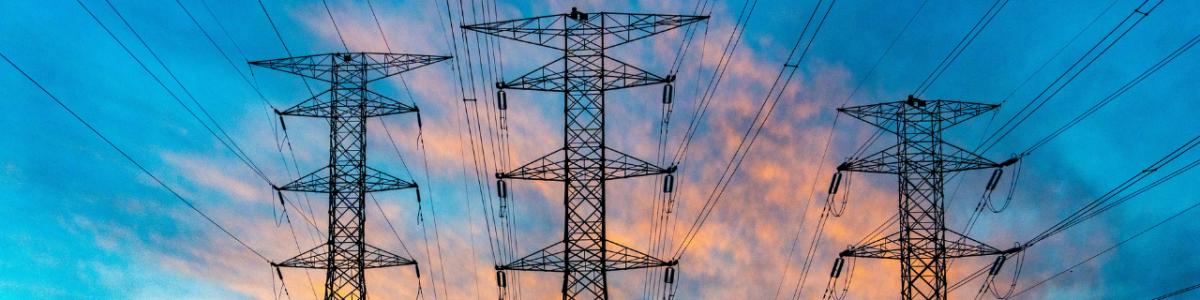
Energy volatility is no longer an occasional disruption. It is becoming the baseline.
In April 2026 alone, global energy markets have been shaken by geopolitical instability, with oil prices pushing towards $100 per barrel amid uncertainty around supply routes in the Middle East.
Closer to home, UK businesses are already feeling the impact:
- SME energy bills are rising sharply, with some expected to more than double
- Input costs across UK industries are increasing at the fastest rate since 2021
- Further price cap increases are forecast later this year despite a short-term drop
This is not a temporary spike. It is a structural shift.
The question for businesses is no longer how to reduce costs today.
It is how to protect themselves from ongoing volatility.
What is energy volatility?
Energy volatility refers to rapid and unpredictable changes in energy prices.
These fluctuations are driven by factors outside of a business’s control, including:
- Geopolitical conflict and supply disruption
- Global commodity markets and oil pricing
- Gas dependency and wholesale pricing mechanisms
- Infrastructure constraints and grid limitations
The UK is particularly exposed.
Even though domestic production exists, energy pricing is still heavily influenced by global markets. Disruption anywhere in the system can quickly impact UK costs.
This is why businesses can see significant cost swings without any change in their own energy usage.
The hidden risk: dependence on the grid
Many UK businesses still operate with a passive energy strategy.
They rely entirely on the grid, accepting whatever price the market dictates.
This creates three key risks:
1. Cost unpredictability
Budgets become harder to forecast. Margins are squeezed without warning.
2. Reduced competitiveness
Businesses with stable energy costs gain an advantage in pricing and planning.
3. Delayed decision-making
Uncertainty discourages investment and slows growth.
We are already seeing this in the data, with business confidence weakening as energy costs rise and outlooks become less certain.
What is energy resilience?
Energy resilience is the ability to control, stabilise, and optimise your energy strategy despite external disruption.
It shifts energy from a reactive cost to a managed asset.
A resilient energy strategy typically includes:
- On-site generation such as solar PV
- Battery energy storage to manage usage and pricing
- Smarter energy procurement strategies
- Load shifting and demand management
The objective is simple.
Reduce reliance on volatile external markets.
Why energy resilience is becoming a competitive advantage
There is a clear divide emerging in the UK market.
Businesses exposed to volatility:
- Experience rising and unpredictable costs
- Struggle to forecast and plan
- React to changes rather than control them
Businesses building resilience:
- Lock in lower long-term energy costs
- Improve operational predictability
- Strengthen financial stability
This is not theoretical.
Recent analysis shows that reliance on gas continues to drive UK price volatility, while renewable generation can significantly reduce exposure to these shocks.
In practical terms, resilience is becoming a commercial advantage.
The shift from cost centre to strategic asset
Historically, energy has been treated as an overhead.
That approach no longer works.
In today’s market, energy decisions influence:
- Profit margins
- Investment planning
- Business continuity
- Long-term competitiveness
This is why more organisations are moving towards structured energy strategies rather than reactive procurement.
Practical steps UK businesses can take now
For businesses looking to reduce exposure to energy volatility, the starting point does not need to be complex.
1. Assess your current exposure
Understand how much of your cost base is vulnerable to market fluctuations.
2. Explore on-site generation
Solar PV remains one of the most effective ways to reduce reliance on grid electricity.
3. Consider battery storage
Battery systems allow you to:
- Store cheaper energy
- Avoid peak pricing
- Improve overall efficiency
4. Review your procurement strategy
Energy contracts should align with your risk tolerance and operational needs.
5. Take a long-term view
Short-term price movements are unpredictable. Long-term strategy is where stability is built.
Final thought
Energy volatility is not something businesses can control.
But how they respond to it is.
The organisations that continue to rely entirely on the grid will remain exposed to rising costs and uncertainty.
Those that invest in resilience will gain control, stability, and a clear competitive edge.
Speak to Olympus Power
At Olympus Power, we work with commercial and industrial businesses to turn energy from a risk into an asset.
If you want to understand how your business can reduce exposure to volatility and build a more resilient energy strategy, speak with our team.
A short conversation can help you identify opportunities that deliver both immediate savings and long-term stability.