
As November draws to a close, many business owners, finance directors and senior leadership teams are busy finalising their budgets for 2027.
Where can operating costs be reduced? Where should investment be prioritised? How can businesses protect their profit margins whilst continuing to grow?
Following Ofgem’s latest energy price cap announcement, energy expenditure is one area that deserves particular attention.
Whilst businesses cannot control what happens in global energy markets, they can take steps to reduce their exposure to them.
Why Is the Energy Price Cap Increasing in 2027?
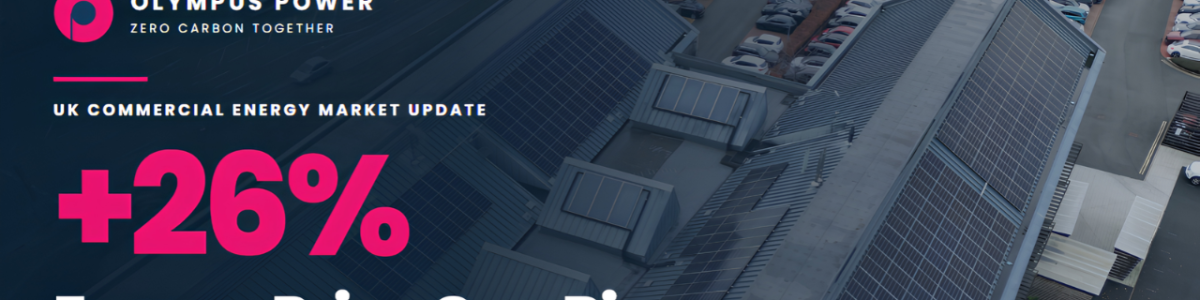
On 25 November 2026, Ofgem confirmed that the domestic energy price cap will increase by 26% for the period between 1 January and 31 March 2027.
For a typical household paying by Direct Debit, this represents an increase in annualised energy costs from £1,723 to £2,166.
Ofgem has attributed the increase largely to rising international gas prices linked to ongoing conflict in the Middle East, placing additional pressure on wholesale energy markets.
Although renewable generation is playing an increasingly important role in the UK’s electricity supply, gas prices continue to influence the cost of electricity.
The announcement is another reminder of how events happening thousands of miles away can have financial consequences for households and businesses closer to home.
Does the Energy Price Cap Apply to Businesses?
No. Ofgem’s domestic energy price cap does not apply to commercial energy contracts.
However, businesses purchase energy influenced by many of the same underlying wholesale markets.
Rising wholesale prices can affect the rates available when businesses renew their energy contracts, potentially increasing operating expenditure and placing additional pressure on profit margins.
This does not mean that commercial energy bills will automatically increase by 26%. The impact will depend on factors such as existing contracts, renewal dates, consumption patterns and procurement arrangements.
For energy-intensive industries such as manufacturing, warehousing, cold storage, food and beverage production, hospitality and data centres, even relatively small increases in energy costs can have significant financial implications.
What Could Delaying Your Energy Strategy Be Costing You?
When you’re managing a business, it’s understandable that energy can fall down the priority list.
There are employees to pay, customers to serve, operational challenges to overcome and budgets to balance.
Energy often becomes a priority only when a contract is approaching renewal or a larger-than-expected bill arrives.
But by that point, opportunities to make meaningful savings may already have been missed.
Consider a business spending £250,000 annually on electricity. A hypothetical 5% reduction in expenditure would represent £12,500 a year, or more than £1,000 a month.
Those savings could be reinvested into recruitment, equipment, business development or other areas of growth.
Every month that a viable energy efficiency opportunity remains unexplored could represent unnecessary expenditure.
The question is not simply how much your business is spending on energy today. It’s how much control you have over what you could be spending tomorrow.
How Can Businesses Reduce Their Energy Costs in 2027?
There is no single energy solution that works for every business. The right approach depends on your operational requirements, consumption, infrastructure and financial objectives.
However, several technologies and strategies are worth exploring.
Commercial Solar PV
Generating electricity on-site through solar photovoltaic (PV) technology can help businesses reduce their reliance on grid-supplied electricity.
For organisations operating from warehouses, manufacturing facilities and other large commercial premises, available roof space or land could represent an underutilised financial asset.
Generating and consuming your own electricity can also provide greater predictability over a proportion of your future energy costs, helping to reduce exposure to wholesale market fluctuations.
Battery Energy Storage Systems (BESS)
Battery energy storage allows businesses to store electricity for use when it is needed.
When appropriately designed and integrated, battery storage can help organisations maximise their use of on-site renewable generation, manage peak electricity demand and reduce reliance on grid electricity during more expensive periods.
For businesses with suitable operational requirements, battery storage can also form part of a wider energy resilience strategy.
Voltage Optimisation (VO)
Could your business be consuming more electricity than it actually needs?
Some commercial premises receive electricity at voltages higher than certain electrical equipment requires.
Voltage optimisation regulates the incoming electricity supply to a more appropriate level, potentially reducing unnecessary consumption in suitable applications.
Unlike technologies focused on generating electricity, voltage optimisation addresses how efficiently electricity is consumed.
The potential financial benefits depend on measured supply voltage, equipment characteristics and site conditions, making a proper technical assessment essential.
Strategic Energy Procurement
Energy procurement should be more than a conversation that happens shortly before your existing contract expires.
Understanding market conditions, renewal timelines, consumption profiles and contractual arrangements can help businesses make more informed purchasing decisions.
When procurement is considered alongside on-site generation, storage and energy efficiency, organisations can develop a more coordinated approach to managing their long-term energy expenditure.
More Than an Energy Solutions Provider: Your Dedicated Energy Concierge
At Olympus Power, we believe that effective energy management begins with understanding your business.
We’re not here simply to sell you a solar installation, a battery storage system or a piece of energy-saving technology.
As your dedicated Energy Concierge, our role is to help you navigate an increasingly complex energy landscape, identify commercially viable opportunities and develop a strategy that aligns with your business objectives.
From initial feasibility and financial considerations through to project implementation and ongoing operation, we help businesses understand their options and make informed decisions.
Sometimes the right starting point is reducing unnecessary consumption. For other organisations, it may be generating electricity on-site, improving procurement arrangements or combining several technologies as part of a longer-term strategy.
It all begins with understanding where you are today and where you want your business to be tomorrow.
Building Relationships That Go Beyond Energy
Throughout 2026, Olympus Power has been recognised by the UK Fast Growth Index, The Allica Bank Great British Entrepreneur Awards and the UK Enterprise Awards.
We’re also proud to work alongside industry networks including the UK Warehousing Association, Cold Chain Federation and North East Automotive Alliance, whilst supporting the incredible work of our charity partner, Transaid.
These relationships reflect our commitment to working collaboratively with businesses, understanding the challenges facing different industries and supporting sustainable, long-term commercial growth.
Before You Finalise Your 2027 Budget, Have a Conversation With Us
As we approach Christmas, it can be tempting to put energy planning on the list of things to revisit in January.
But why wait until 2027 to start exploring how much your business could save in 2027?
There is something you can do today that won’t cost you a penny.
Book a complimentary energy strategy consultation with Olympus Power.
You don’t need to have an agreed investment budget. You don’t need to commit to a particular technology or project. You simply need to be open to exploring what’s possible for your business.
Together, we can discuss your current energy challenges, explore potential efficiencies and identify opportunities to strengthen your long-term energy strategy.
The energy market will continue to change. Having a strategy in place can help your business prepare for those changes rather than simply react to them.
Protect your profits. Strengthen your resilience. Plan for the future.
Book your complimentary energy strategy consultation today at www.olympuspower.co.uk.
Olympus Power | Your Energy Concierge
Source: Ofgem, Energy price cap to rise by 26% from January 2027, published 25 November 2026.